Sunday, November 22, 2015


Did you know the Beach Boys were originally called The Pendletones,  thanks to their signature shirts?

In the early 1960s, a group called The Pendletones adopted their name in honor of the surf uniform of the day: Pendleton shirts worn over tee shirts with khakis. The original lineup included brothers Brian, Dennis and Carl Wilson, their cousin Mike Love, and friend Al Jardine.
The Pendletones soon changed their name to the Beach Boys . Even though only one member of the group had ever been on a surfboard, they sang about the California surfing scene; waves, sunshine, cars and girls. This might have been simple subject matter, but layered instrumentation and soaring harmonies made these songs anything but simple. Under the unique artistic leadership of Brian Wilson, the Beach Boys defined surf music. And though their name changed, their uniform didn’t. The band wore this blue and charcoal plaid shirt on the covers of 45s and LPs throughout the early 1960s.

The Beach Boys’ Pendleton shirts were part an existing trend. When surfing came to California in the late 1950s, surfers devised performance wear: swim trunks and plaid Pendleton shirts over a layer of Vaseline. Surfers wore the same shirts over light pants on the shore, and a fashion trend was born.
This look hit the radio airwaves courtesy of the Majorettes, whose song, “White Levis” became a number one hit in 1963. As the lyrics said, “My boyfriend’s always wearin’ white Levi’s…and his tennis shoes and his surfin’ hat and a big plaid Pendleton shirt.”


That’s a Pendleton shirt cover of that 45, even though they named the song after the pants. You can give it a listen here, and don’t be surprised if you start singing along. But let’s get back to the shirt made so popular by the Beach Boys.

In 2002, Pendleton celebrated eight decades of Pendleton shirts by bringing back iconic shirts from each decade. To celebrate the 1960s, we brought back the Board Shirt in the same plaid seen on all those record covers. We officially named it the Blue Beach Boys Plaid.

The shirt has stayed in the line ever since. We’ve used it in caps, hats, bags and jackets. It’s still made in the original 100% virgin Umatilla wool as it was back then, but we’ve interpreted it in rayon for campshirts and cotton for sleepwear.

We have done a few colorations of the plaid. Whether it’s in blue, coral, rust or olive, the pattern is easily recognizable.


There is a discussion now and then in Pendleton’s Menswear division about which is our most enduring men’s item of all time. Some say it’s the Topster, the shirt jacket that defined collegiate wear in the 1950s and 60s. Some say it’s the Westerley cardigan worn by the Dude in “The Big Lebowski.” Others claim the honor for the Beach Boys Board Shirt.

This shirt is almost as beloved as the band that made it famous!


Where Tradition and Heritage go hand in hand: The Cotswolds


The surroundings


The source


The process


The materials


The making


The options


The styling


The choice


The place


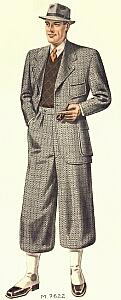
Breeks, plus twos, plus fours, knickerbockers, are they all the same?


Breeks, plus twos, plus fours, knickerbockers - are they all the same - what is the difference and does it matter?


Knickerbockers
As the name suggests, they come from Europe and the name is not generally recognised here in Great Britain. It is usually a short Breek (just to the knee and no more) and quite tight on the leg - all right for walking in a straight line but not for climbing, bending etc. as there is not enough material and no give.

Breeks
Again a more European word then British - the garment can be more generous in leg width but is again short in length, fastening just below the knee and with no turnover they are more fitting and thus not much use in climbing, hunting etc. they are classed as more a fashion garment.

Plus Twos
Here we have the original British garment which are often confused with Breeks. First of all the length of the leg should finish exactly four inches below the bottom of the knee - when the garment is fastened correctly (just below the knee) a correct plus two should give a two inch fold (two inch down and two inch up). If one is doing a lot of bering an even longer leg length may be required or even wider in the leg, however Plus Twos are widely used in walking, golfing any out door sporting pursuit.

Plus Fours
The old photographs of golfers and sports people generally show this garment which is not quite so popular today as it once was - very baggy and a four inch fold over the knee (remember this would measure eight inches below the bottom of the knee when unfastened). These are generally ordered by people that are purely stalking or requiring a lot of bending and leg movement.

What are the benefits of Plus Twos/Fours?
Very practical for any outdoor activity golfing, fishing, hunting, hill walking etc. giving, as it does, plenty of freedom to bend the legs - they are also currently extremely fashionable, comfortable and are supplied in a large variety of materials. Another benefits that only the socks (stockings) would get wet or dirty thus ensuring the longevity of the garment. Indeed those that try them out for the first time enthuse about them and wonder why they never tried them before.


Missoni never bores


Sunday, November 1, 2015

Californian Road Trip with an Eye for Traditional Clothing


This autumn I spent three weeks in California and was able to visit a few of my favorite fashion spots and discovered new ones, her are the highlights:

The Strongholt
1625 Abbot Kinney Boulevard in Venice 
The best of all the upmarket denim shops I visited in the LA area.
No vintage, all new stuff. Here you kind find your jeans in unusual colors and new materials.  I really liked the striped ones. The price is high, but 50% lower as Mr. Freedom. Great service and very nice store. Make sure to check out the rest of Abbot Kinney, the street is full of  great stores and none of the regular chains one would expect to be there. (for as long as it lasts)
They only have very few different styles, personally I do not like to have my jeans above my waist and this made my decide not by a pair at Strongholt. 
Strongholt store
Typical Strongholt look


Mr. Freedom
7161 Beverly Boulevard Los Angeles
The Mr. Freedom shop so special, it felt as if I was walking into a heaven full of fantastic menswear. I had seen a lot of Mr. Freedom wear online and some pieces here in Amsterdam. But seeing it all together is magic!
Make sure to stop by this store when you like their style.
But I must warn you, it is very very expensive. Even the smallest little scarf/bandana will cost you 130 USD. And yes, it is made out of some kind of rare Japanese vintage cloth that looks stunning. Still it is as small as a handkerchief.

Mr. Freedom interior


Global Rebels
7519 Melrose Ave. Los Angeles.
A great find for me. This is the only store that sells Da Vinci California. Very 50s styles short sleeve shirts also knows as bowling shirts and recently made very well known by Charlie Sheen who wears them all the time in the TV series Two and a Half Men.
It can imagine this shirts have a somewhat nerdy image and yes they are a little oversized, but I do like to total look so much I simply had to buy a few and have been wearing them the rest of my vacation in California. They are comfy in warm weather, very light and breezy.
For more information visit the post. 


Slow Vintage
7474 Melrose Avenue, Los Angeles
Excellent vintage store full of American classics!
Check out the area, there are plenty of interesting stores here. This clearly is the funky part of Melrose. I bought a pair of great true vintage work boots.

American Vintage
7377 Melrose Avenue, Los Angeles
Another excellent vintage store, fair prices and a great collection, especially the short sleeve shirt collection is superb.

Pendleton outlet
125 Ocean View Boulevard

Pacific Grove (near Monterey, California)

US Airforce officer service shoes


Thursday, October 29, 2015

Let the winter begin!


Lone Wolf boots are directly patterned after long-lost classic styles from the “Good Old Days” in American work wear; that is an era, generally speaking, that hit its zenith in the 1950s and saw its demise by the early 1970s.  The Lone Wolf mark is your guarantee you are buying real work boots meant to withstand the rigors of the most-demanding tasks, but they also just so happen to look as beautifully as they function because they are hand crafted from superior-quality leathers and other components with the utmost of pride by a tiny, family-run shoe business.  This shoe company is a true anachronism, taking you back to a time when shoes were made by a cobbler with hammer in hand, a shoe last deftly cradled between his legs and a brace of steel nails poking out from between his lips.  And when we say it’s a family-run business, we mean the shoes are actually hand made by several generations of one family that includes men and women and their offspring who have chosen to be old-world shoe artisans, producing superior-quality rugged footwear one pair at a time.  Demand is so great for the Lone Wolf boots in Japan v s. the available supply, orders are typically completed 6-10 months from the time they were booked by the stores that sell the boots, and some styles have been known to be sold out for a year or more – NEVER hesitate or delay in making a purchase of Lone Wolf boots!
Lone Wolf Carpenter Boots are based on a vintage style dating back to the 1930s that was once produced by legendary footwear manufacturers in the USA that have long since vanished.  The uppers are manufactured from a beefy, full-grain imported steer hide leather that is vegetable tanned for no less than 12 weeks, then beautifully aniline-dyed in classic dark brown, after which the leather is sewn and hand lasted over a period of days to ensure maximum stretch and flexibility to the finished shoe, and finally the lasted uppers are sewn by hand using the famous Goodyear storm welt - NEVER are soles vulcanized to the uppers or sewn in some cheap manner to duplicate the appearance of a true Goodyear welt at a sacrifice to comfort, quality and durability.  The Carpenter also features a high-quality leather outer sole that, in turn, is stitched and nailed to New-Old-Stock GENUINE vintage “Cat’s Paw” rubber soles, with GENUINE Vintage “Cat’s Paw” heels glued and nailed in place.  Cat’s Paw soles were regarded as the best rubber soles back in the day and Lone Wolf is the only brand today still utilizing a vintage surplus of these soles for footwear production.  Vintage details of style and superior quality include the following:

• Lone Wolf label produced on a vintage shuttle loom
• Lace-to-toe hooks and eyelets
• Removable false tongue
• Triple-stitched vamp for durability
• Two colors of contrasting thread employed for assembly of uppers
• Aniline-dyed cowhide uppers that will wear and age fabulously, yielding an incredible vintage patina
• Custom-made shoe laces to precisely match the heavy, corded type originally employed on this style of shoe
• Nickel-plated metal lace-up eyelets and speed hooks
• Firm, protective toe box
• Gusseted-leather tongue
• Full-leather counter pockets
• Hand-lasted uppers
• Hand-sewn genuine Goodyear welt with heavy-duty corded thread
• Heavy, non-corrosive steel shank for extra heavy-duty support
• Genuine New-Old-Stock vintage Cat’s Paw rubber soles and heels attached to high-quality leather outer soles
•Vegetable-tanned, aniline-dyed, full-grain steer hide uppers
• Leather insoles for better breathing of feet and moisture absorption


Wednesday, October 28, 2015

Buzz Rickson Clothing, it is rare but extremely beautiful


Buzz Rickson 1st-Model U. S. Army Tanker Jacket 1941

Officially designated on 10 February 1941 by the U. S. Army Quartermaster as JACKET, WINTER, COMBAT, P. Q. D. Spec. No. 26, this jacket was destined to become one of the most popular articles of clothing used by the G. I. in World War II, and was to gain post-war Hollywood film fame when worn by actor Brad Pitt in the 2014 release of "Fury."  
The jacket formed part of a three-piece suit, including a matching helmet and bib-front trousers; this set was intended to be a winter suit for the Armored Forces of the U. S. Army, hence the jacket’s nickname that would make it famous – Tanker Jacket.
First-model jackets of P. Q. D. Spec. No. 26 featured open-top patch pockets and a double-faced cotton twill wind flap behind the zip closure, which was later replaced with a wool-backed wind flap.  The revised Spec. No. 26A jackets are easily distinguished from first-model Spec. 26 jackets by having cotton-lined slash pockets and maintaining the wool-backed wind flap that appeared on later Spec. 26 jackets.  While the Spec. 26A jackets were the most typical and dominant in production and use in WWII, the first-model Tanker Jackets of Spec. 26 are, by comparison, more unique looking, they have more history, having seen combat first in N. Africa as worn by the vanguard tankers of the 1st and 2nd Armored Divisions and even General George S. Patton, Jr., and they soldiered on in combat right up to the end of the war in 1945.  Usage of the Tanker Jacket, however, far transcended the Armored Forces.  The inherent stylish good looks, comfort, practicality and warmth of the Tanker Jacket made it a favorite among all troops; officers very commonly sought and wore the Tanker Jacket.
The basic jacket has been copied many times over in a variety of civilian jacket styles since its original issue to the U. S. Army in 1941 – a true testament to the timeless, classic styling and practicality of the original design. Today, a vintage first-model Tanker Jacket from WWII in a wearable size and condition will command a substantial four-figure price in the collector market, if you can even find one.
This Buzz Rickson’s 1941 Tanker Jacket has only been resurrected from its multi-year hiatus since 2014 with the popularity of Brad Pitt’s “War Daddy” character in the film “Fury.”  The Buzz Rickson's 1941 Tanker Jacket superbly captures all of the features found on a vintage original examples and is even used by museums for displays due to the extreme scarcity and high price of the original jackets from WWII. Take note of these authentic features masterfully crafted into every Buzz Rickson's 1941 Tanker Jacket - things you'll only find poorly imitated on lesser "knockoffs":

• Precise copy of original U. S. Army Quartermaster label design
• Custom manufacturing of the correct twelve-ounce, cotton-twill shell to precisely match 1941 US Army specs. and dyed a correct shade of Olive Drab #3
• Cotton-thread construction
• Custom manufacturing of the correct, Olive Drab, blanket-wool lining to precisely match 1941 US Army specs.
• Two unlined patch pockets
• Vintage-style 1941 brass “Conmatic” zipper.  YES, the zipper commonly found on original WWII Tanker Jackets - an amazing and valuable feature found on no other Tanker Jacket copies on the market today!
• Blanket wool-backed wind flap protector located behind zipper closure
• Custom manufacturing of the correct, two-ply, worsted wool-knit collar, cuffs and waist skirt in Olive Drab
• Double-pleated bi-swing action back


The design staff at Buzz Rickson’s has resurrected a classic winter coat from the wardrobe of the 1930s U. S. Navy and U. S. Coast Guard, typically seen being worn by officers and NCOs on hazardous dirigible duty.
No expense has been spared in this masterpiece that incorporates features common to the era, including the rounded Mackinaw-style collar, double-breasted frontal closure with rugged horsehide buttonhole tabs to allow for either right or left crossover fastening, genuine urea buttons, exterior lower pockets trimmed in rugged horsehide that provides for the pocket flap to be worn tucked into the pocket opening or worn covering the pocket opening, wool-lined sleeve interior, sumptuous, half-inch sheepskin lining in the body and a deliciously cozy, brown-colored sheepskin storm collar, and a jacket exterior fabric crafted on vintage looms from a hard-wearing, all-cotton moleskin twill in medium brown.
This is a coat that will not just keep you warm, but will look better the more it is worn and the fabric creases, folds and mellows from use like your favorite pair of jeans.  Quantities are extremely limited for this one-time offering from Buzz Rickson’s.


Now, you may ask, what is a Buzz Rickson four-needle, set-in-sleeve, loop-wheeled sweatshirt? Four-needle sewing machines overlay the edges of all seams, creating a flatter, smoother seam construction with far less seam allowance, thus decreasing bulk.  Loop-wheeling looms are special machines that are able to weave a perfect tube, but they can only weave one set diameter per loom; this means the factory needs a different loom for each size - very expensive - which is why you hardly ever see true tube construction in modern-day garments. Even the most expensive designer sweatshirts will usually have a side seam - sometimes two seams!  Tube construction ensures true shape is maintained, not only during its construction, but during its life of wear.  This is the proper way to make a sweatshirt; in the good old days, the proper way was the only way.  It's cheap and easy to make shirts from a flat piece of cloth, and most customers would never notice the difference, though they may wonder why their not-so-cheap sweatshirt seemed to lose its shape after only a few washes - but now you know.
Traditional vintage-style sweatshirts of this caliber are not available even from the fashion high street. With shrewd foresight of the oncoming vintage clothing market, much of the old, U.S.-made 1920's machinery and looms were bought up by the Japanese in the 1970's when they were otherwise deemed obsolete.  These old looms, although much slower than modern machinery, are able to produce much higher-quality fabric - fabric that perfectly matches the quality of those garments made from the good old days.  For those who can appreciate such quality, these sweatshirts are sure to please.
Buzz Rickson's premium, vintage-style, all-cotton athletic sweatshirts are made from medium-weight, 100% cotton fabricated on 1920's-vintage loop-wheeling machines, styled with all the correct features found on the old sweatshirts, and cut to hug the body in a flattering form without bulk, just as the vintage originals did.  Limited quantities available.  Take note of these authentic vintage styling features:
• Custom manufacturing of the medium-weight, all-cotton fleece fabricated on a vintage loop-wheeling loom
• Vintage wash
• Four-needle, TUBE-Body construction with no side seams, and with lock stitch throughout
• Vee-placket neck detail
• Set-in sleeves
• Four-inch cuff and waistband
• Exact copy of the original-style rayon-on-cotton labels
• True vintage fit for flattering appearance, not a sloppy, relaxed fit with droopy shoulder seams


Thursday, November 6, 2014